






For years, the advice for getting found online felt relatively straightforward.
Research keywords. Publish helpful content. Optimize your website. Build authority over time.
Those fundamentals still matter. But search is entering a new chapter.
With Google’s AI Mode and AI-generated search experiences becoming more common, people are receiving complete answers directly within search results instead of clicking through to multiple websites. That shift is causing understandable anxiety for many small business owners.
“Will anyone visit my website anymore?”
“Is SEO dead?”
“Do I need to start over?”
The short answer is no.
SEO is changing, not disappearing. Businesses with thoughtful strategies and genuinely helpful content are often in a stronger position than those relying on shortcuts or outdated tactics.
What Is Google’s AI Mode?
Google’s AI Mode uses generative AI to answer complex questions directly within Google Search. Instead of simply displaying a list of websites, it can summarize information from multiple sources and guide users through follow-up questions.
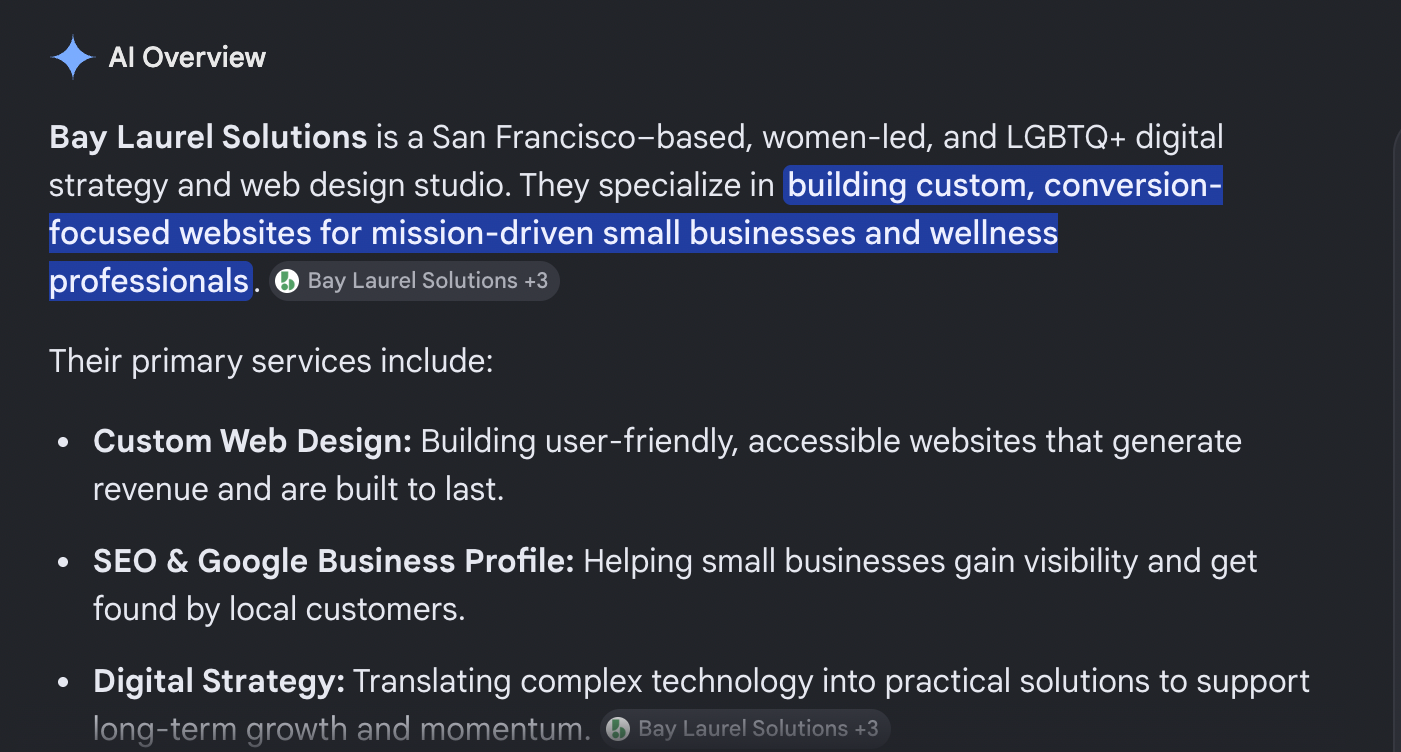
For searchers, this often feels faster. But for business owners, it changes how people discover websites.
Instead of searching, “best therapist website design”
Someone may ask, “Who helps therapists build websites that bring in more private-pay clients?”
Or, “How do I redesign my nonprofit website without losing SEO?”
These longer, conversational searches require websites that demonstrate real expertise and clear messaging.
Does AI Mean SEO Is Dead?
Not at all.
Actually, AI makes high-quality SEO more important than ever.
Google still needs reliable sources to generate accurate answers. AI doesn’t invent trustworthy information. It pulls from websites that consistently demonstrate expertise and provide useful content.
Businesses that publish thoughtful, original content are more likely to become part of those answers.
The websites most at risk are those built around
- Thin blog posts
- Generic AI-written content
- Keyword stuffing
- Duplicate information
- Pages created solely to rank
Those tactics were already becoming less effective before AI arrived.
Why Helpful Content Matters More Than Ever
AI rewards businesses that answer real questions.
Instead of creating dozens of short articles targeting slight keyword variations, many businesses will see better results by publishing comprehensive resources that genuinely solve problems.
Ask yourself
- What questions do clients ask every week?
- What misconceptions do people have?
- What decisions feel overwhelming?
- What do you wish every new client understood?
Those are often your best blog topics.
💡 Read This Next
If you’re struggling to generate traffic from your existing content, you might also enjoy Your Blog Posts Are Good. So Why Isn’t Anyone Finding Them? and How Do SEO and Web Design Work Together to Drive Business Growth? from our Insights library.
Why Your Website Matters Even More
AI may answer someone’s initial question, but your website is still where people decide whether they want to work with you.
When someone is considering hiring a designer, therapist, consultant, attorney, or nonprofit partner, they’re looking for more than information.
They’re trying to answer a few important questions
- Can I trust this business?
- Do they understand my challenges?
- Have they helped people like me before?
- What will it actually be like to work with them?
Your website should answer those questions naturally. Through your messaging, portfolio, testimonials, services, and overall user experience, it helps visitors build confidence before they ever reach out.
AI can introduce someone to your business, but it can’t replace the experience of exploring a website that feels credible, thoughtful, and aligned with their needs.
That’s why every page should have a purpose. It shouldn’t just describe what you do. It should help visitors understand why you’re the right fit and guide them toward the next step.
Strategy Comes Before Design
At Bay Laurel Solutions, every project begins with an Online Success Session. Before we think about colors or layouts, we focus on understanding your business goals, your audience, and what success should look like. That strategy becomes the foundation for a website designed to support measurable business growth, not just look good.
🎯 Website AI Readiness Checklist
Use this quick self-audit to see how prepared your website is for AI-powered search.
If several boxes remain unchecked, there’s an opportunity to strengthen your website before AI search becomes even more widespread.
Should Small Businesses Still Invest in Blogging?
Absolutely.
Why Blog Content Is a Long-Term Business Asset
There are so many interesting reasons why blogging may become even more valuable as search evolves.
Unlike paid advertising, which stops working the moment you stop paying for it, blog content is evergreen marketing. A well-written article can continue attracting visitors, building trust, and generating leads for months or even years after it’s published.
Blogging also gives you something many other marketing channels don’t. It creates a growing library of expertise where each article answers a question your ideal clients are already asking. This is an amazing opportunity to demonstrate your knowledge while also giving search engines more opportunities to understand what your business does and who you help.

As AI-powered search becomes more common, that library becomes even more important. Google’s AI systems look for content that is helpful and trustworthy. Businesses that consistently publish original insights and practical guidance are more likely to be recognized as reliable sources than those relying on generic, AI-generated content.
The goal isn’t to publish more articles. It’s to publish better ones.
Your Blog Continues Working After You Hit Publish
Instead of writing dozens of short posts targeting individual keywords, focus on creating thoughtful resources that answer the questions your clients ask most often. Not only does this help your visibility in search, it also gives you a library of resources you can reuse every day. A huge bonus is when a prospective client emails with a common question, you don’t have to type the same explanation from scratch. You can send a thoughtful response, include a link to a detailed article, and let your blog do the heavy lifting.
💡 Read This Next
If you’re wondering whether your website itself is helping or hurting your visibility, our articles Your Website Is Up. But Is It Actually Working? and 10 Signs Your Small Business Website Needs a Redesign in 2026 are great places to start.
What Technical SEO Still Matters?
AI doesn’t eliminate technical SEO. It makes a healthy website even more important.
Continue paying attention to
- Fast page speeds
- Mobile-friendly design
- Clear page structure
- Accessibility
- Secure HTTPS connections
- Internal linking
- Descriptive page titles and meta descriptions
- Structured data where appropriate
Helpful tools include
These tools don’t replace strategy, but they can help you understand how your website is performing and where improvements are needed.
Pause and Reflect
Instead of asking, “How do I rank #1 on Google?”
Try asking, “How can my website become the most helpful resource for the people I want to serve?”
That mindset is much more aligned with where search is heading.
Businesses that consistently educate, build trust, and create meaningful user experiences are likely to remain visible regardless of how Google’s interface evolves.
The Bottom Line
AI is changing how people discover businesses online, but it hasn’t changed what influences someone to become a customer.
People still want to work with businesses they trust. They want clear, helpful answers to their questions, confidence that you understand their needs, and reassurance that you’re the right person to help.
That’s why a strategic website paired with thoughtful, high-quality content remains one of the smartest long-term investments a small business can make. While search technology continues to evolve, the businesses that consistently educate, build credibility, and create a great user experience will continue to stand out.
The biggest shift isn’t that SEO no longer matters. It’s that strategy now matters more than simply producing more content.
If your website no longer reflects your business, isn’t generating qualified leads, or you’re unsure how AI-powered search may affect your visibility, now is the perfect time to take a fresh look at your online presence. A few strategic improvements today can help your website continue working for your business, no matter how search evolves tomorrow.
Our Online Success Program is designed to do exactly that. We’ll evaluate your current website, identify opportunities for growth, and create a practical roadmap built around your business goals before any design work begins. If you move forward with implementation, the session fee is credited toward your project.
That way, you’re not just reacting to Google’s latest update. You’re building a website that’s ready for whatever comes next.
The businesses that win in AI search won’t necessarily publish the most content. They’ll publish the most helpful content.

Frequently Asked Questions About Google’s AI Search
No. AI is changing how people discover information, but websites with helpful, trustworthy content are still the foundation of Google’s search results. Strong SEO now focuses even more on expertise, user experience, and answering real questions.
Absolutely. Blogging remains one of the most effective forms of long-term organic marketing. Every high-quality article can continue attracting visitors, building trust, and generating leads long after it’s published.
Start by creating original, helpful content that answers your customers’ questions. Pair that with a fast, well-organized website, clear service pages, and a strong overall user experience.
Yes. AI may introduce people to your business, but your website is still where potential customers decide whether to trust you. It’s where they learn about your services, understand your process, and ultimately decide whether to contact you.
Consistency matters more than volume. One thoughtful, well-researched article each month is often more valuable than publishing several short, generic posts that don’t provide meaningful insight.